Showing posts with label crisis. Show all posts

Sunday, January 22, 2017


Acknowledging Your Own Behavior in

Becoming a Stronger Leader
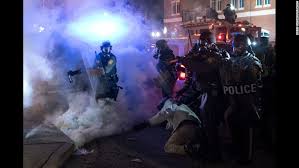


We all know the stories of how life used to be when we were younger. Even better remember the tales your parents, grandparents told you over and over about how life used to be easier, safer back in the good old days? You could leave the door open and nobody would take anything from your house? It is safe to say the world has changed so much. That sense of security found in the community and groups our grandparents talk about has been overshadowed by the focus on individual achievement. It seems we experience more pressure, more speed, and more complexity and consequently more fear.  Fear of the unknown.  Fear of things we can control and extreme fear from those we can’t.  “Not being good enough”, or not fitting into our collective peer groups, or being able to compete on all levels in today’s very competitive and complex societies all fuel this anxiety.  Our personal behavioral issues are not the only thing we have to worry about.  We also have to react to events that we can’t control yet affect us somehow none the less.  Dealing with terrorist or other types of criminal behaviors or even our psychotic neighbors adds to that angst. The reasons behind these fears are an interesting point of research.  To me, what is even more interesting is the idea that we can overcome this fear by controlling it.  While we can’t control every situation, many of which are outside our realm of personal influence, we can control how we react to each situation, whether from an innate moral perspective or a learned one.

People have a profound need to feel safe.  It’s a basic human instinct.  In order to do that, people need to be able to protect themselves and their loved ones by any means possible. Unfortunately, due to the increased focus on individual talents and lack of group cohesiveness an individual must most often “fend for themselves”.  This means an individual must deploy mental and physical strategies.  Since most of us aren’t big enough to just “pound some sense into” the other guy, we must rely on our mental abilities to defuse or de-escalate the situation before it becomes physical. 

What if the alienation of society and the “stand alone” approach is exactly why we got here in the first place?  Remember the stories about the good old days?

We at BLACK believe that the key lies in returning the stability of the community through individual effort.  By bringing this aggravated anxiety level to a more acceptable one within the individual, society can function as it should.  At BLACK we not only look at the community in general, but also within a company or a team of people.  Our way of working focuses on the individual’s improvement. Being aware of your own strengths and having confidence in using them in your own environment benefits the society as a whole.

Companies, groups and teams of people manifest the same characteristics as individuals and therefore, experience the exact same problems, albeit on a different scale. Results driven, “the bottom line” and ICT are the key words within which any (major) organization operates these days.  Even though people are considered the most important asset, in general, we seem to misplace the personal touch due to the pressures of results minded actions.  We get so lost in the management process that we lose sight of the individual’s contribution toward the whole.  This process of managing people as just another asset in the company inventory doesn’t allow for the organization to achieve its true potential.  The days of sound management are over, and the move from efficiency to productivity is starting. To achieve productivity, organizations must have effective leaders.  Leaders can only guide an organization to achieve greatness, if they recognize and acknowledge their own weaknesses and strengths.  A long-term self-actualization process is needed.  With the world’s increasing population and the burden of more complex societies the need for leadership will become paramount.  While the focus will be on efficient and effective system management, it will only be achieve through the transformation from sound management to truly effective and inclusive leadership.  In the future, leaders will play a greater part in every organization and will be essential to all organizational structures – both, private and public, large and small. 

Through our B.L.A.C.K. methodology we provide leaders the skills they need for organizational success by inspiring them to acknowledge their own personal behavior traits.  By doing so, they gain confidence in their abilities to motivate team members “toward greater things”.                                        

Within our vision of training, we firmly believe that we can achieve these goals by changing the way individuals and groups reacted to situations.  We have no illusion in thinking we can  banish criminality, threats or unwanted behavior as a whole, but we believe we can be a factor in creating more self-awareness by acknowledging how we all contribute to the feeling of fear, environmental pressure and loss of control.  All authority figures will play a huge part in this vision. After all he or she must lead by example and create a feeling of a calm and safe environment. Community members, whether within an organization or a neighborhood, must have a sense of confidence in their leaders because of their ability to create “safe environments”.  Only then can we degrade fear and go from “standing-alone” to “standing together”.  In the last year we have seen an escalation in the appalling interaction between private and public authorities and the societies they govern. There is no need to point fingers as to who is to blame, but perhaps we can all take a good look at ourselves and make the decision to do better by being better.

To quote a great leader, President Thomas Jefferson:

“ Laws made by common consent must not be trampled on by Individuals. It is very much the Interest of the good to force the unworthy into their due Share of Contributions to the Public Support, otherwise the burthen on them will become oppressive indeed.”

BLACK

BLACK is a Dutch company specialized in leadership training.  It is run by (former) armed forces with a high success rate. For further information we kindly refer to our website http://www.cpk-black.com

Sunday, May 17, 2015

Unconventional Crises Require Unconventional Leadership


Unconventional Crises
Require Unconventional Leadership
by
Ed Beakley
 Director, Project White Horse 084640

If you “Google” leadership, you will find that there are 158 million sites noted. Yet the events of this century make me wonder if we really understand what leadership must be in our current environment, and lead me to ask on the opening page of my Project White Horse  website, that what if nothing leaders have ever been taught or experienced is sufficient to face the problem? 
The implication is that there is more to survival in worst case disasters than just “who’s in charge,” and that we as citizens need to be less expectant of the arrival of duex ex machina by way of the cavalry is on the way, and become more able to be an active part in our own survival when worst cases occur. Leadership required – but maybe of a different kind.
The nature of worst cases is that the complexity and chaos generated, almost by definition mean that no leader by himself is capable of the multi-faceted decisions required.
Many types of emergencies occur every day and are routinely mitigated by local first responders. In certain areas hurricanes, flooding, earthquakes and fire are seasonal or typical of the area. The manifestation is well understood and planning well thought out and resourced. While they move past routine emergencies based on magnitude of destruction and/or significant loss of life, physical response assistance goes no higher than county or state mutual aid and the need for federal assistance is basically limited to financial aid.  Command and control during the event and recovery follows the locally developed “playbook.”  A Category 3 level (CAT 3) hurricane is a good example of a large emergency or conventional level disaster event, with potential for significant damage, yet normally it is well understood with only a small possibility of response being overwhelmed at the local level.
But researchers note that there are “disasters that go beyond typical disasters.” The latter have come to be noted as “catastrophes.”  Most notably would be 9/11, the 2004 Tsunami, Hurricane Katrina in 2005, and in 2010, the earthquakes in Haiti and the Deepwater Horizon Oil Spill. indeed, earthquakes, heat waves, floods, volcanoes, super typhoons, blizzards, landslides and droughts killed at least a quarter million people in 2010 — the deadliest year in more than a generation. More people were killed worldwide by natural disasters that year than have been killed in terrorism attacks in the past 40 years combined.
By virtue of unusual scale, a previously unknown cause, or an atypical combination of sources, responders face challenges that are indeed novel, the facts and implications of which cannot be completely assimilated in the moment of crisis.  These events are not only characterized by high stakes—the likelihood of major losses (to life, limb, property, heritage, or other highly valued social or private assets) – but they have shared striking similarities, inasmuch as they foster destabilization of leaders in charge of response and reconstruction efforts, and the whole of communities. 
Dr. Erwan Lagadec in  Unconventional Crises, Unconventional Response: Reforming Leadership in the Age of Catastrophic Crises and Hypercomplexity further defined these events as follows:
Conventional crises rarely require high levels of inbuilt resiliency from our systems. This is because such events tend to affect circumscribed “ground zeros,” and therefore can be tackled by bringing to bear the “normal” assets and strategies of the unscathed outside on the impacted area.  On the other hand, catastrophic or hyper-complex events will destabilize entire systems, forcing leaders and public alike to abandon “normality” altogether, and look for a coherent fallback position. However, it is eminently difficult to organize an orderly general retreat, especially when leaders must redefine a new line of defense while on the run, and from the ground up. Miracles at Dunkirk are precisely that: miracles.  Even before the planning phase, and more fundamentally, the makeup of our systems itself must anticipate the destabilizing effects of unconventional events by weaving resiliencies (visible or “hidden”) into their fabric.”
The level of personnel training, system performance and system-system interoperability acceptable for routine or conventional crisis events does not guarantee usefulness when the environment becomes hyper- complex and severely stochastic. Nor does the 1) training and experience of key decision makers in the lower end of the spectrum, nor 2) “planned for in the playbook script” leadership insure that the magnitude and novelty of the emerging catastrophe does not overwhelm communities and emergency management, or simply negate “the plans” and won’t destabilize the entire response structure. 
Unconventional/Hyper-complex/Catastrophic level events are often noted as Low Probability, High Impact events. but we should keep in mind that these events are actually Absolute-Certainty, Low-Predictability, High-Impact incidents that take place all the time.
Hyper complexity makes it near impossible for “traditional” leaders to plan, let alone coordinate response efforts.  Extrapolation of training and system evaluation suitable for routine emergencies and conventional disasters as suitable for unconventional or catastrophic operational response is an intrinsically flawed strategy.
So, what can be done?                                                                                                    
To start, we must recognize and acknowledge the differences between crisis/disaster types and the different set of challenges in planning, execution, and required forms of leadership. Additionally, we must accept that we will most probably require new and innovative analytical methods and metrics, and methods for learning - not just training.
We must ask what accounts for whether the first response process will be able to provide effective mitigation of unfolding disaster incidents. How can that effort best be organized to respond to novel or unconventional crises? 
Then, what must be done in advance to create the capacities needed in the face of unconventional crises?   The real "new" must be recognizing the need to put higher level leadership - beyond incident management and the trained response force - into complex crisis exercises with intent on learning how to think and not on "feel good" check in the block exercises, that leave senior decision makers with the parting thought " all is good, I got this."
More information about Project White Horse 084640 can be found at:  http://projectwhitehorse.com/