Showing posts with label leadership. Show all posts

Sunday, August 16, 2020

 The New Centurions

New Concepts for Policing


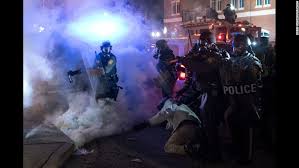
When I first started to outline this article, I was thinking about big bold steps to be taken in order to re-direct police services.  I got the idea from a tweet by Sen Harris, in which she said, “We need to demilitarize the police”.  Well, I couldn’t disagree more.  The reason police departments have military equipment is so that they can deal with the most serious violent crimes and criminals.  Police departments need armored vehicles and high caliber weapons, so that they can deal with gangs and organized criminal enterprises which are using those tactics, but they don’t need to bring them every time they engage the public (we’ll talk about that as a separate issue next time).  Those enterprises have no regard for human life, if they did they wouldn’t be kidnapping kids or young adults and forcing them into slavery, they wouldn’t be selling drugs to the most vulnerable within our society, just so they can make money.  So, to fight in this war the police have to have military style weaponry and they should be using them with efficiency and effectiveness.  You wouldn’t throw rocks at someone with a bazooka, so why would we expect the police to fight without the right tools.

But for the purpose of this article I’ll leave the strategic planning up to those responsible for administration of police departments whether at the local, State or federal level. 

Great interview about the changes needed in policing here:

https://twitter.com/FareedZakaria/status/1272231871896850434

Instead I want to concentrate on a more tactical or operational approach with simple solutions that will most probably be unpopular, especially with the rank and file, but I believe will go a long way in changing the culture within departments, assist in avoiding corruption or unwanted police behaviors and change the way the public views and interacts with the police.  The good news is, these ideas for change don’t need the rule of law.  They just need to be implemented as a new way of thinking and conducting business.  This will take real leadership; change is driven from the top.  While the need for change may be driven from the masses, change actually comes about because those in-charge decide to make the changes being requested. 

In ancient Rome, the Centurions were the professional officers of the Roman Army.  They commanded the troops, which sometimes meant that from time to time they enforced Roman law outside of the military legions they commanded.  Unfortunately in those times they also administered punishment by cutting or burning people’s hand off for stealing or other petty crimes or used a vine staff, with which they disciplined even Roman citizens who were protected from other forms of beatings by the Porcian and Valerian Laws (what punishments Roman citizen could be subjected to; they were not allowed to be humiliated or demeaned with degrading or shameful forms of punishment; such as, whipping, scourging or crucifixion.  Non-citizens and slaves had a different set of rules).  Hopefully, we’re way beyond that.  

At least, I like to think we are, but we can create new Centurions by:

First, stop appointing police chiefs based on political affiliation.  Currently, for the most part chiefs are either appointed by the city/county board, mayor or other elected officials or are elected themselves. Both methods are political.  Since laws are apolitical and should be enforced apolitically, so should the appointment of the police charged with enforcing those laws equally and justly.

Second, first and second-line supervisors should take a test that includes police administration, social – emotional, non-escalating skillsets, leadership skills, human rights and the protection of personal dignity training.  Allot more time needs to be spent of developing social skills needed in conflict resolution, at least at the same level that they spend on equipment usage techniques.

Thirdly, patrolman should be assigned “beats” randomly but with purpose and clarity.  The most troublesome neighborhoods should be assigned to those officers with the most experience.  There should always be a senior and a junior officer together whenever possible.  We should get rid of the notion of “Partners”, whereby, the same two people are assigned a specific sector each and every shift, so that they always work together.  Sure, there is an advantage to having “partners” as the patrolmen become familiar with each other and the neighborhoods they serve.  But conversely, they also become “too friendly” with each other or the residents, and worse, by becoming either complacent or tolerant of bad behaviors.   Additionally, the argument will be made that the patrolman needs to be able to trust his/her partner with their life.  That’s true, but if you can’t do that with everyone in the department, then there’s a problem.  The public also demands the same expectation. 

Over the years we got away from two man patrols due to budget cuts and other factors.  I think we should go back to them.  No more single patrols.  I’m not saying just to double everyone up by consolidating patrol zones.  No, this will only lead to longer response times.  Instead, I’m saying double force sizes by bringing on new officers.  Many will say, “We don’t have the money”.  To me that’s just another way of saying, I’m too lazy to do the hard work to figure out how this can be done.  So, I don’t buy the argument that it will be too costly.  Think about this, we just spent several trillion dollars on corporate and public welfare for COVID relief and didn’t bat an eye.  Not to mention the 10’s of trillions we’ve spent and are spending on the bank bailout of 2008.  It’s not about money, it’s about deciding.

Fourth, everyone in an administrative position, who is physically capable, should work “the road” once a week or a couple days a month – maybe a weekend or night shift.  Even those will mobility issues could have a role.  This gives fresh eyes and reminds everyone why they are there – to serve and protect.

And finally, move personnel around within departments, within organizations.  The military does this with regularity and at tremendous costs.  But the benefits far outweigh the costs.  Each move brings “new life”.  Getting a fresh set of eyes on things is invaluable.  It brings with it; fresh and innovative ideas, opportunities for personal growth, problem solving, and deters complacency and stagnation.  It also roots out those who have a history of misconduct.  New supervisors usually don’t tolerate bad behaviors that old supervisors allowed to go unaddressed. 

A recent study of police training revealed, that on average policeman in the US receive less than a thousand hours of training, whereas their European counterparts receive thousands of hours.  Most police chiefs in Europe are also lawyers or have law degrees, as do many mid-level supervisors.  I don’t believe this requirement exist within the US.  Maybe it should?  

Calls for defunding the police are just wrong.  Police departments need more resources not less.  That said, so do social programs that address the root causes of criminality and unwanted behaviors.  We need to add funding that teaches non-aggressive tactics and de-escalation techniques, social – emotional learning skills, and coping tools that deal with attitudes and behaviors.

I worked for ten years with the Carabinieri, the Italian National Police.  In those ten years I never once saw them man-handle anyone.  Sure they put people in handcuffs and took them to jail but I never witnessed any aggressive tactics on their behalf.  They always talked the guy into getting handcuffed. 

Great article about Carabinieri tactics, here:

https://foreignpolicy.com/2020/06/10/american-cops-could-learn-a-lesson-from-italys-carabinieri/

To illustrate my point, a few years ago, my son was travelling from Italy to the US.  He had been visiting his aunt and grandma.  At the airport in Rome, he placed his backpack on the conveyor belt at the x-ray machine.  After it was scanned, a Policeman approached him and asked my son to accompany him.  They went to a room, and the policeman pulled an apple, sandwich and serrated kitchen knife from his backpack.  The Policeman said, “Young man, we have one question, who packed your lunch your Mom or your Grandma?”  The Policeman knew, my son being in his thirties was old enough to know better than to bring a knife through the checkpoint.  He also knew that Moms being Moms in Italy meant, someone else had packed his lunch; Mom or Grandma had packed the knife so he could peel the apple, it was just logical. Clearly my son wasn’t a threat.  The Policeman kept the knife and my son boarded his plane.  I believe that had a similar incident occurred here in the States my son, would most probably have gotten arrested for possession of a deadly weapon, would subsequently have a criminal record, which could have an impact on his employment possibilities. 

We have a saying in the military that, “soldiers will be soldiers”.  In other words without supervision they will do stupid stuff.  Good behaviors AND bad behaviors are learned.  Shouldn’t we be doing everything we can to make sure good behaviors are nurtured, if so it’s about leadership?

Change comes from big and bold thinking.  Look at, putting a man on the moon.  Pretty big stuff there!  We didn’t know how we would do it but we decided we would.  Then it came down to many, and I mean many, small steps to get us there.  Well, if we are to truly reform the police, policing and the interactions they have with the public, we’ll need to take many small steps to get there.  NASA had many failures along the way, but eventually they figured it out.  I believe we can too, after all this is America – this is who we are.


Sunday, November 19, 2017


First Responders Require Specialized Training to Deal with

 Special Needs Individuals


By Patricia O’Connor (Guest contributor)


Death of individuals with alleged disabilities through the actions of law enforcement has been reported in the media and has contributed to citizens of the United States protesting and seeking changes in methods used by law enforcement agencies.

NBC News reported on March 14, 2016 that almost half the people who die at the hands of police officers have some type of disability. According to an investigation conducted by Portland Press Herald in 2012 approximately half of the 500 people killed each year by police were mentally ill.

Police officers have become the default responders for incidents, including those involving mental health calls. They often find themselves in situations where urgent medical care by trained and certified professional practitioners would be more appropriate.

Misdiagnosis of symptoms or the misinterpretation of displayed behavior as being aggressive, resisting arrest, or threatening by law enforcement and by medical responders has resulted in the unnecessary injury or death of persons with special needs. Communities are ultimately legally liable. The question for community leaders has to be, “Why is this misunderstanding occurring and how do we fix it?”

So let’s examine this phenomenon – lack of training for first responders.

FIRST RESPONSE

First, let’s admit first responders do not face the daily challenges of their jobs with intentions of hurting, maiming or killing individuals with special needs. They are merely faced with circumstances which are unfamiliar to them. These circumstances require specialized training and knowledge. So often initial training has not been conducted and certainly, on-going training isn’t provided either.

First responders are required to have specialized training in other areas of their complex duties; i.e., weapons training, first aid, social behavioral skills, etc. in their particular field in order to serve their communities and respond appropriately to the needs of those whom they serve. Individuals with exceptional needs require exceptional care. First responders must have knowledge and training with the appropriate skill sets to deal with specific disabilities and needs so that their response is suitable. Interaction with people afflicted with mental disabilities requires specific and focused interaction just as interactions with people having other medical disabilities require special treatment.

TRAINING, TRAINING AND MORE TRAINING

As they say in the real estate industry, it’s all about “location, location, location”, well in dealing with mental health issues it’s all about “training, training, training”. Training must be relevant, engaging and consistent. Training sessions including both theoretical application and practical “role playing” exercises work best. Training is a continuous occurrence. It needs to occur routinely but not so often that it neither detracts from everyday duties nor develops into something so mundane that it becomes stale and ineffective. Training would save lives, both for the individuals encountered by first responders and the first responders themselves, especially those arriving on scene first – law enforcement officers.

THE WAY FORWARD

Whether responding to a scuffle at a convenience store or a major natural disaster as witnessed recently in northern California those responding need to be equipped not only with the physical tools needed for the job but also with the mental tools for resolving these highly charged situations. People with mental disabilities present special challenges during these extreme emotionally events. First responders should be equipped to deal with them. We can prepare for these situations through a serious of preventive measures; such as, placing placards on doors or windows indicating that special needs individuals are inside, creating communication systems with access to databases that first responders can “call up” while responding in order to ascertain what they might find at the incident scene and to alert them to obstacles or challenges they may encounter upon arrival. Just knowing when and where won’t be enough. Responding units will need to have skills sets that de-escalate the situation and resolve them in an appropriate manner. Additionally, it is essential for communities (civil authorities, medical, fire, law enforcement and citizens) to come together to address these issues.

A humane society is measured by its care for those who are most vulnerable. How will we be judged?

AUTHOR BIO

Patricia is a Doctoral student in Educational Administrative, with emphasis on Special Needs Education. She regularly provides insight and input to the Department of Homeland Security as they prepare Federal Emergency Management Agency (FEMA) guidance for dealing with special needs issues during times of crisis.  She is the founder and CEO of SirenUSA, an on-line training tool for first responders. 

“I can do things you cannot, you can do things I cannot; together we can do great things” – Mother Teresa


Friday, August 25, 2017

"Don't Make Me Come Over There."


How many times did we hear that phrase when we were growing up?  Or, "You just wait 'til your father gets home!"  I know I did.  I was scared to death, at least, until I was twelve or so and my Grandma whacked me with a wooden yard stick and it broke.  Then I knew I was too big to get a spanking any more.  Besides, by then I figured out I could blame my younger brothers and they'd "take it for me".  Love those guys!
Well, the same holds true in corporate America.  Sure, the boss isn't going to paddle anyone.  At least, I hope not.  But "unwanted behaviors" in the work place must be dealt with and it doesn't always have to be the boss or the security folks to deal with it. 
When "unwanted behaviors" occurred someone needs to step in.  That can be a co-worker or colleague.  Not that they need to "tattle" but behaviors outside of what's acceptable puts everyone at risk - from both a safety and a security perspective.
Non Security Personnel Can Play a Part
Non-security members of the organization can play a major role in identifying behavior that is unwanted.  But, they must be trained on when to interact on their own and when to keep their distance and report.  Smart leaders will develop scenario based training that includes all the members of their organization and promotes the interactions of the groups.  This can go a long way in instilling confidence in each other and creating a culture of unity and capability.  Which in turn, creates a feeling of safety and security within the organization.
But sometimes, even the best trained staff member is not capable of responding or diffusing the situation.  In this case, security force personnel should be called in.
Security Forces Compliment Non-security Forces 
Security response forces actually compliment other staff members and not the other way around.  That said, security personnel must receive additional training and have ability to accurately assess and engage the threat.  The operative word is “accurately” assess.  If they misunderstand the actions of the threat or assume aggressive behavior when there isn’t any the situation will quickly spiral out of control and actually escalate.  How many time have we heard, “I thought he had a gun”?
With that in mind, training is fundamental and paramount.  Training must be physically and mentally challenging.   Virtual, “situation based awareness” scenarios can be developed so that they stress the participants.  Role playing is always a benefit. Unless stressful conditions are trained for, guard forces won’t react properly when confronted by them.
The mindset that the responding officer must always be in control is correct.  That doesn’t mean they are superior it means they have the skills to neutralize the threat, sometime that requires force and sometimes not.  The use of de-escalating tactics is a learned behavior.  As such, highly aggressive and chaotic training scenarios serve the response forces well in learning how to deal with these types of behaviors. 
Cultural norms also play a big part is calming the confrontation between response forces and perpetrators.  What works in Los Angeles doesn’t necessarily work in Amsterdam or New Delhi. 
Responding forces must remember, the continuum of use of force is scalable and that deadly force is only used as a last resort.

Sunday, May 21, 2017

Case Study at European Simulation and Validation Center (ESVC)


Protecting Students and Staff from Active Shooters

A Case Study at the European Simulation and Validation Center (ESVC)


THE TASK AT HAND – PROTECTING STUDENTS AND STAFF

Protecting the students at the European Simulation and Validation Center (ESVC) was our objective and specifically, reducing the mass casualty count during active shooter scenarios.  With the increase in terrorist attack, it was only logistical that the Executive Director would seek out protection for her staff and cadre of instructors, but primarily, for the students attending simulation modeling at the ESVC.

“We pride ourselves in being a professional organization with extensive safety and security knowledge. Protection of our staff and students in any way is a main priority”, says, Karen Zwart, Executive Director from her offices in Ede, The Netherlands.  

Because CPK United BV is known for their expertise in training senior government leaders and industry executives, as well as, their key staff elements, especially in the transportation and aviation fields, the ESVC is the “go to” place when it comes to conducting serious gaming models for evaluating emergency plans and the actions required by them.  The ESVC provides a comfortable environment that is conducive to leadership training at the highest levels in lieu of costly field exercises.  The ESVC can create an organization specific built (physical) environment virtually; use existing company or agency plans, while allowing “players” to travel down a variety of decision paths in a virtual environment.  This allows them to test plans through their interaction, individually and collectively to evaluate efficiencies – without the additional expense of a full-scale exercise and without anyone getting hurt.   Using ESVC simulation allows plans and procedures to be tweaked before a real incident occurs and damage or injury occur.   

KNOWN COMPONENTS OF THE RISK FORMULA

All good risk formulas have some commonalities.  The formula usually goes something like this; C (asset criticality) X Threat (What can harm us) X Vulnerability (How susceptible we are to the harm) = Risk (How bad is it?).  In this particular instance, two of the essential elements in calculating risks were already known to the assessment team.  Those elements included the criticality of the asset, (high value targets/students).  To understand the criticality, imagine for a second, if a multi-national corporation’s entire senior leadership along with key staff were on-site being trained and ESVC were involved in a catastrophic incident.  It would not only mean damage and death but could also influence the future of the organization and could very well be the end of that company. 

And, the second known element – threat – was an active shooter scenario.

ASSESSING VULNERABILITIES – A SNAPSHOT IN TIME

The next element of the formula was to determine the vulnerabilities of the site as they related to the threat.  Haines Security Solutions was called in to do the assessment due to its extensive experience in conducting risk analysis and developing mitigation strategies as they relate to building design.  Experts in forced entry, building design, antiterrorism and structural engineering repaired to the site to conduct the evaluation.

It should be noted that during conversations with the staff it was noted there was a low-moderate probability of occurrence of this type of attack; however, due to the catastrophic impact on the corporate structure of an organization attending training if impacted (low/moderate risk – critically high impact), it was determined to be of extremely high importance to conduct a full range of assessments.

Each area of the facility (reception area, training facility, staff offices, storage areas, coffee/snack center, bathrooms and print shop) was examined from both the owner’s and the aggressor’s points of view.

USING THE ASSET BASED RISK ANALYSIS METHODLOGY

This dedicated team of subject matter experts collected physical security, as well as, operational data on-site in order to allow them to fill-in the vulnerability element and complete the risk formula

They then started collecting physical data from the curb inward.   Data was collect on three layers where vulnerabilities could occur; i.e., property perimeter, building façade and internally controlled spaces.  Data about the IT system or software used at the ESVC was not collected because the ABRA, in this case, did not call for the protection of data on the IT system.  Instead, it called for the protection of lives.

Once back at their offices, the Haines Security Solutions team members used an assessment methodology called Asset Based Risk Analysis[1] or ABRA to analyze the data and make effective recommendations. 


The primary purpose of ABRA is to quantitatively measure threats, assets, vulnerabilities, and risks associated with large and/or small government or private facilities.  It establishes a security baseline, explores upgrades, recalculates vulnerabilities and risks, and recommends optimized features or improvements for facilities.  In essence, ABRA identifies current levels of vulnerability and risk and then identifies improved levels with the implementation of specified countermeasures.  Basically, a snapshot of where the organization is today and where it could be after countermeasures are implemented.  In addition, ABRA identifies the associated cost and impact of the improvements.  ABRA includes the performance of six sub-analyses: threat, target, vulnerability, optimization, risk, and cost–benefit.


Threat Analysis


The treat analysis is based on information collected during the site visit.  The information produces a threat rating, which measures the threat likelihood (the probability an attack will occur), and an effectiveness rating (the probability that an attack will be successful).


ABRA takes into account the current local threat environment for five conditions; i.e., stand-off, explosive; covert, overt and chem/bio.  Although the project only called for the assessment of an active shooter threat, since we were already on site, it only made sense to conduct all five analyses.

The assessment team started the assessment asking a series of about 50 questions to the staff to further determine the asset’s criticality and threat environment.   Additional soft intelligence was collected via the internet and a clear threat picture emerged.

Target Analysis


The target analysis is designed to evaluate and measure the value of all targets to the user and to the aggressor.  Targets could include any type of asset or target including facilities, people, equipment, money, processes and systems.  The end result of the target analysis is a numeric rating based on the target value or criticality to the user and the target value or usefulness to the aggressor.


Vulnerability Analysis


Our vulnerability analysis is designed to quantitatively evaluate and measure how vulnerable a specific asset is to a specific threat. This phase of ABRA identifies the countermeasures currently in place for a specific target and is assigned a value based on their effectiveness in mitigating threats (Baseline Vulnerability Rating [BVR]).


Optimization Analysis


The optimization analysis is the reapplication of the vulnerability analysis after implementing hypothetical improvements resulting from countermeasures that could be used for a specific asset.  Hypothetical countermeasures could include programmatic or procedural options.  The end result is an optimized vulnerability rating (OVR) associated with the specific target being analyzed, in this case, a training facility.  Based on the optimization analysis, the average vulnerability and risk rating can be identified and stated as a percentage.


Risk Analysis


The risk analysis is the aggregation of the threat, target, vulnerability, and optimization analyses to determine the calculated value of risk associated with a specific asset that is being targeted by a specific threat.


Cost–Benefit Analysis


The cost–benefit analysis compares the potential results of specific countermeasures for reducing or mitigating threats against specific assets.  The cost–benefit analysis is based on cost versus reduction in vulnerability and risk.


MAKING RECOMMENDATIONS THAT WORK

Most risk analyst make recommendations that bring the facility up to code compliance or base solutions on costs.  The recommendations made during this assessment were made based on risk reduction and not costs.   Our analysis showed that all recommendations were either extremely or highly cost effective.  Those recommendations included four main or specific areas.

Inhabited Space Hardening

Windows – Replacing the existing exterior windows with 6 mm laminated or poly-bicarbonate glazing.

Walls – Retrofitting the walls with a ballistic resistant material and continuing that concept to other features.

Furniture – Retrofit any interior elements, such as, reception desk, student chairs, tables, white-board (basically, anything or anywhere a student could hide behind if they were unable to exercise their first option of running away).

Electronic Security Systems

Electronic Security Systems – Install integrated access control and surveillance (CCTV) systems.

Mass notification system – Install internal and external speakers, alarm signals and visual message boards.

Crime Prevention through Environmental Design (CPTED)

Natural Surveillance/Natural Access Control – Use landscaping to reroute pedestrian traffic entering the building, so that as people approach they are observed from within the building.

Plans, Policies and Procedures

Use internal resources/corporate expertise to update plans, policies and procedures

IN SUMMARY

The recommendations would be implemented in all areas of high occupancy or critical areas (inhabited spaces); i.e., training facility, staff offices, coffee/snack center and stairway.  It should be pointed out that normally stairways or other transit type spaces would not receive the same level of protection because they are usually considered to have low occupancy, but input from the ESVC indicated it to be mission critical and a single-point-failure location for their operations.

Bathrooms, storage rooms, print shop and garage were not recommended to be retrofitted with ballistic protection because of their low occupancy density (uninhabited spaces).

Overall the risk reduction to the active shooter threat was calculated at 84 percent.  In other words, the Delta if you will, from where the risk is today to where it will be when all of the recommendations are implemented.   If implementation of all of the recommendation in the report were accomplished the risk reduction of the other threat scenarios would be between 74 and 98 percent.  The total project costs, including the data collection, evaluation and analysis and implementation of all of the recommendations was Euro72,130 ($76,200).  If only the recommendations pertaining to ballistic protection from the shooting threat were adopted the costs would be Euro53,560 ($56,700).  Recommendations were also prioritized to be implemented based on risk reduction and protection to the largest number of people first, and to allow their implementation as funding becomes available.

In summary, that’s a very small amount to pay to protect the lives of students and staff.  The added protections afforded by the recommendations help reduce risk and provide safety from a host of criminal and terrorist activities.  

Zwart added, “The conclusions made were rock solid and provided clear vision of the budget choices we need to make in the years to come.  By using their proprietary formula, Haines Security Solutions was able to demonstrate the tangible risk reduction of their recommendations.  Something we’ve not seen in other assessment methodologies”. 
Making it a safe and secure environment for those attending training – after all isn’t that what it’s all about?


[1] Haines Security Solutions was awarded a 2017 Platinum level Government Security award in the Risk Analysis category for its Asset Based Risk Analysis (ABRA) methodology.  The GOVIE awards are presented by Security Today magazine to outstanding products that address security challenges within the municipal, government, Safe Cities and law enforcement markets.

Sunday, January 22, 2017


Acknowledging Your Own Behavior in

Becoming a Stronger Leader


We all know the stories of how life used to be when we were younger. Even better remember the tales your parents, grandparents told you over and over about how life used to be easier, safer back in the good old days? You could leave the door open and nobody would take anything from your house? It is safe to say the world has changed so much. That sense of security found in the community and groups our grandparents talk about has been overshadowed by the focus on individual achievement. It seems we experience more pressure, more speed, and more complexity and consequently more fear.  Fear of the unknown.  Fear of things we can control and extreme fear from those we can’t.  “Not being good enough”, or not fitting into our collective peer groups, or being able to compete on all levels in today’s very competitive and complex societies all fuel this anxiety.  Our personal behavioral issues are not the only thing we have to worry about.  We also have to react to events that we can’t control yet affect us somehow none the less.  Dealing with terrorist or other types of criminal behaviors or even our psychotic neighbors adds to that angst. The reasons behind these fears are an interesting point of research.  To me, what is even more interesting is the idea that we can overcome this fear by controlling it.  While we can’t control every situation, many of which are outside our realm of personal influence, we can control how we react to each situation, whether from an innate moral perspective or a learned one.

People have a profound need to feel safe.  It’s a basic human instinct.  In order to do that, people need to be able to protect themselves and their loved ones by any means possible. Unfortunately, due to the increased focus on individual talents and lack of group cohesiveness an individual must most often “fend for themselves”.  This means an individual must deploy mental and physical strategies.  Since most of us aren’t big enough to just “pound some sense into” the other guy, we must rely on our mental abilities to defuse or de-escalate the situation before it becomes physical. 

What if the alienation of society and the “stand alone” approach is exactly why we got here in the first place?  Remember the stories about the good old days?

We at BLACK believe that the key lies in returning the stability of the community through individual effort.  By bringing this aggravated anxiety level to a more acceptable one within the individual, society can function as it should.  At BLACK we not only look at the community in general, but also within a company or a team of people.  Our way of working focuses on the individual’s improvement. Being aware of your own strengths and having confidence in using them in your own environment benefits the society as a whole.

Companies, groups and teams of people manifest the same characteristics as individuals and therefore, experience the exact same problems, albeit on a different scale. Results driven, “the bottom line” and ICT are the key words within which any (major) organization operates these days.  Even though people are considered the most important asset, in general, we seem to misplace the personal touch due to the pressures of results minded actions.  We get so lost in the management process that we lose sight of the individual’s contribution toward the whole.  This process of managing people as just another asset in the company inventory doesn’t allow for the organization to achieve its true potential.  The days of sound management are over, and the move from efficiency to productivity is starting. To achieve productivity, organizations must have effective leaders.  Leaders can only guide an organization to achieve greatness, if they recognize and acknowledge their own weaknesses and strengths.  A long-term self-actualization process is needed.  With the world’s increasing population and the burden of more complex societies the need for leadership will become paramount.  While the focus will be on efficient and effective system management, it will only be achieve through the transformation from sound management to truly effective and inclusive leadership.  In the future, leaders will play a greater part in every organization and will be essential to all organizational structures – both, private and public, large and small. 

Through our B.L.A.C.K. methodology we provide leaders the skills they need for organizational success by inspiring them to acknowledge their own personal behavior traits.  By doing so, they gain confidence in their abilities to motivate team members “toward greater things”.                                        

Within our vision of training, we firmly believe that we can achieve these goals by changing the way individuals and groups reacted to situations.  We have no illusion in thinking we can  banish criminality, threats or unwanted behavior as a whole, but we believe we can be a factor in creating more self-awareness by acknowledging how we all contribute to the feeling of fear, environmental pressure and loss of control.  All authority figures will play a huge part in this vision. After all he or she must lead by example and create a feeling of a calm and safe environment. Community members, whether within an organization or a neighborhood, must have a sense of confidence in their leaders because of their ability to create “safe environments”.  Only then can we degrade fear and go from “standing-alone” to “standing together”.  In the last year we have seen an escalation in the appalling interaction between private and public authorities and the societies they govern. There is no need to point fingers as to who is to blame, but perhaps we can all take a good look at ourselves and make the decision to do better by being better.

To quote a great leader, President Thomas Jefferson:

“ Laws made by common consent must not be trampled on by Individuals. It is very much the Interest of the good to force the unworthy into their due Share of Contributions to the Public Support, otherwise the burthen on them will become oppressive indeed.”

BLACK

BLACK is a Dutch company specialized in leadership training.  It is run by (former) armed forces with a high success rate. For further information we kindly refer to our website http://www.cpk-black.com

Sunday, April 17, 2016


IMPACT CENTRIC PLANNING

Planning for Low Probability-High Impact Events


TRADITIONAL RISK MANAGEMENT METHODOLOGIES

The traditional mindset of most leaders, whether government or civilian (yes, even in the corporate sector) is that a crisis, situation or event that has the potential to disrupt service or mission capabilities can be planned for by writing a comprehensive emergency plan.  Once that’s done, when an event, situation or crisis occurs, they’ll simply pull out the plan and follow it.  This thought-process is flawed from the beginning.  While plans are a good thing to have they are not what they are made out to be unless the crisis follows it.  Unfortunately, most crisis haven’t seen what you written and won’t do what you’ve outlined for it to do.

The mindset of most folks charged with developing the emergency management policy, procedures and plan focus on most likely scenarios first.  They do this because of limited resources, usually in the form of funding.  It’s always about the money! So they plan for what’s most likely and then hope and pray “the BIG One” doesn’t happen on their watch.

UNCONVENTIONAL CRISIS AND THE READINESS FACTOR

Crises can be divided into two categories – conventional and unconventional.  Their nomenclature pretty much says it all. 

Conventional events occur daily somewhere and we’ve usually prepared for them in terms of resources, training and response.  Mainly because we are used to dealing with them, so we make sure we have the resources on hand.  And if we can’t have our own resources then we set up mutual aid agreements with agencies in our neighborhood of the country to provide support.  Unconventional events on the other hand, are a completely different animal.  They are either so rare or so great we have no way of planning or containing them.  Severe novelty events occur infrequently – they are novel, at least we think that.  Honestly, they occur all the time somewhere.  Just watch the news and you’ll get a sense of how common they are.  So the other half of the definition is severe.  Unfortunately, when combined with novelty sever events can immediately overwhelm local resources, know-how and response.

How often do we hear community leaders say, “we never thought it would happen here”?  This attitude causes a failure in “readiness”, communities are “prepared”; i.e., resources stockpiled and training’s been conducted but really are they ready to handle to event because it is outside of their scope of possibilities. 

Community leaders often get paralyzed and delay critical decisions until the crisis fits into a more recognizable model they can get their arms around.  The delay in action causes a delay in achieving “on the ground” superiority over the event.  This in turn can perpetuate the condition, make it worse and cause for a longer timeline in gaining the upper hand.

OFF-SET OR WELL BANKING

Since managers cannot fund every project or procedure that will cope with a crisis scenario there is a way to program money into future planning and that’s through a process called “off-set” or “well banking”.  Think of it as money set aside for the “what if – worst case” scenarios that we have every intention on spending once we’ve programmed it into our budget cycle and we’ve saved enough.  I contend that corporations, communities, and other entities can set aside a small portion of their budgets for these worst case events.

More about Impact Centric Planning and other methodologies discussed during workshop at Naval Air Station Jacksonville 14-16 June.  Contact us at 805 509-8655 or https://hainessecuritysolutions.com to register.


Sunday, May 17, 2015

Unconventional Crises Require Unconventional Leadership


Unconventional Crises
Require Unconventional Leadership
by
Ed Beakley
 Director, Project White Horse 084640

If you “Google” leadership, you will find that there are 158 million sites noted. Yet the events of this century make me wonder if we really understand what leadership must be in our current environment, and lead me to ask on the opening page of my Project White Horse  website, that what if nothing leaders have ever been taught or experienced is sufficient to face the problem? 
The implication is that there is more to survival in worst case disasters than just “who’s in charge,” and that we as citizens need to be less expectant of the arrival of duex ex machina by way of the cavalry is on the way, and become more able to be an active part in our own survival when worst cases occur. Leadership required – but maybe of a different kind.
The nature of worst cases is that the complexity and chaos generated, almost by definition mean that no leader by himself is capable of the multi-faceted decisions required.
Many types of emergencies occur every day and are routinely mitigated by local first responders. In certain areas hurricanes, flooding, earthquakes and fire are seasonal or typical of the area. The manifestation is well understood and planning well thought out and resourced. While they move past routine emergencies based on magnitude of destruction and/or significant loss of life, physical response assistance goes no higher than county or state mutual aid and the need for federal assistance is basically limited to financial aid.  Command and control during the event and recovery follows the locally developed “playbook.”  A Category 3 level (CAT 3) hurricane is a good example of a large emergency or conventional level disaster event, with potential for significant damage, yet normally it is well understood with only a small possibility of response being overwhelmed at the local level.
But researchers note that there are “disasters that go beyond typical disasters.” The latter have come to be noted as “catastrophes.”  Most notably would be 9/11, the 2004 Tsunami, Hurricane Katrina in 2005, and in 2010, the earthquakes in Haiti and the Deepwater Horizon Oil Spill. indeed, earthquakes, heat waves, floods, volcanoes, super typhoons, blizzards, landslides and droughts killed at least a quarter million people in 2010 — the deadliest year in more than a generation. More people were killed worldwide by natural disasters that year than have been killed in terrorism attacks in the past 40 years combined.
By virtue of unusual scale, a previously unknown cause, or an atypical combination of sources, responders face challenges that are indeed novel, the facts and implications of which cannot be completely assimilated in the moment of crisis.  These events are not only characterized by high stakes—the likelihood of major losses (to life, limb, property, heritage, or other highly valued social or private assets) – but they have shared striking similarities, inasmuch as they foster destabilization of leaders in charge of response and reconstruction efforts, and the whole of communities. 
Dr. Erwan Lagadec in  Unconventional Crises, Unconventional Response: Reforming Leadership in the Age of Catastrophic Crises and Hypercomplexity further defined these events as follows:
Conventional crises rarely require high levels of inbuilt resiliency from our systems. This is because such events tend to affect circumscribed “ground zeros,” and therefore can be tackled by bringing to bear the “normal” assets and strategies of the unscathed outside on the impacted area.  On the other hand, catastrophic or hyper-complex events will destabilize entire systems, forcing leaders and public alike to abandon “normality” altogether, and look for a coherent fallback position. However, it is eminently difficult to organize an orderly general retreat, especially when leaders must redefine a new line of defense while on the run, and from the ground up. Miracles at Dunkirk are precisely that: miracles.  Even before the planning phase, and more fundamentally, the makeup of our systems itself must anticipate the destabilizing effects of unconventional events by weaving resiliencies (visible or “hidden”) into their fabric.”
The level of personnel training, system performance and system-system interoperability acceptable for routine or conventional crisis events does not guarantee usefulness when the environment becomes hyper- complex and severely stochastic. Nor does the 1) training and experience of key decision makers in the lower end of the spectrum, nor 2) “planned for in the playbook script” leadership insure that the magnitude and novelty of the emerging catastrophe does not overwhelm communities and emergency management, or simply negate “the plans” and won’t destabilize the entire response structure. 
Unconventional/Hyper-complex/Catastrophic level events are often noted as Low Probability, High Impact events. but we should keep in mind that these events are actually Absolute-Certainty, Low-Predictability, High-Impact incidents that take place all the time.
Hyper complexity makes it near impossible for “traditional” leaders to plan, let alone coordinate response efforts.  Extrapolation of training and system evaluation suitable for routine emergencies and conventional disasters as suitable for unconventional or catastrophic operational response is an intrinsically flawed strategy.
So, what can be done?                                                                                                    
To start, we must recognize and acknowledge the differences between crisis/disaster types and the different set of challenges in planning, execution, and required forms of leadership. Additionally, we must accept that we will most probably require new and innovative analytical methods and metrics, and methods for learning - not just training.
We must ask what accounts for whether the first response process will be able to provide effective mitigation of unfolding disaster incidents. How can that effort best be organized to respond to novel or unconventional crises? 
Then, what must be done in advance to create the capacities needed in the face of unconventional crises?   The real "new" must be recognizing the need to put higher level leadership - beyond incident management and the trained response force - into complex crisis exercises with intent on learning how to think and not on "feel good" check in the block exercises, that leave senior decision makers with the parting thought " all is good, I got this."
More information about Project White Horse 084640 can be found at:  http://projectwhitehorse.com/